


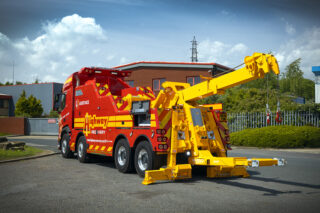
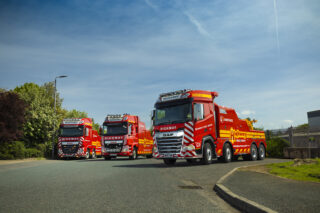
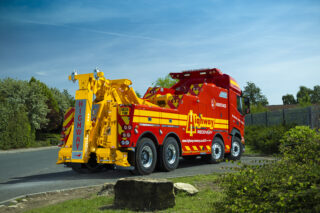
WHETHER IT'S ON THE MOTORWAY OR DOWN A REMOTE COUNTRY LANE, HIGHWAY RECOVERY HAS IT ALL COVERED THROUGHOUT YORKSHIRE. AND IT'S A COMPANY THAT'S UNDENIABLY IN ITS PRIME.
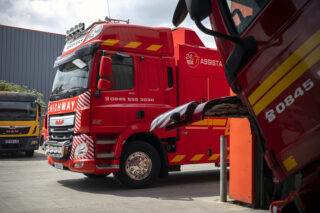
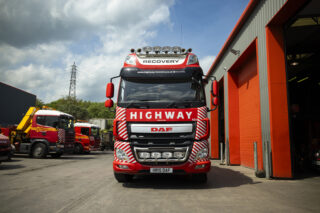
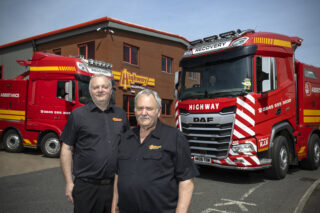
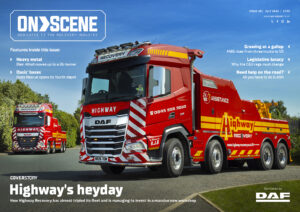
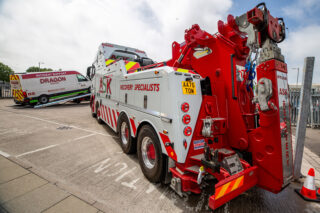
If you have seen Highway Recovery’s latest fleet addition on the roads of Yorkshire recently, you will probably have remembered it – the 150-tonne gross train weight DAF XF 8×4 wrecker with Boniface Trident recovery equipment is undeniably impressive, particularly in the company’s striking red livery with yellow detailing.
Unsurprisingly, this truck is used for its heaviest rescues, such as those of commercial vehicles and cranes, says Mark Carnevale, group operations director. “This has all the bells and whistles on it inside and out,” he says. “It’s an impressive vehicle.”
The DAF is one of five trucks joining the fleet in recent months – and five more are scheduled to arrive before the end of the year – the other current additions being two 7-tonne Iveco Dailys and two 12-tonne MAN TGLs. These have brought the total number of vehicles on the Highway Recovery fleet to 50, ranging from service vans upwards.
BOTH INTERNAL COMBUSTION AND ELECTRIC POWER ARE MOVING FORWARD FAST AT VOLVO, AS A RECENT EVENT IN GOTHENBURG DEMONSTRATED.
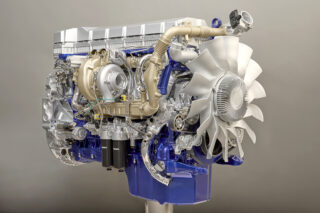
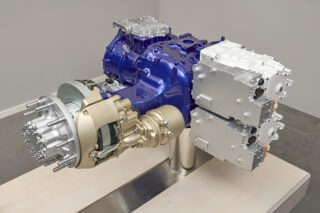
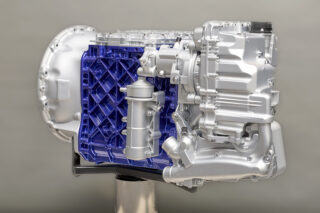
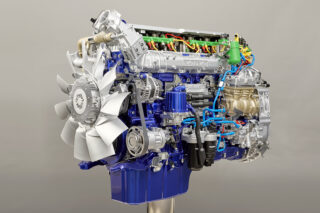
Volvo Trucks recently launched two all-new 13-litre engines, one diesel and the other gas-powered, and has promised to introduce a hydrogen-powered version of this design before 2030. At a launch event in Gothenburg, it also showcased its latest battery-electric vehicles (BEVs), offering greatly extended ranges and higher gross vehicle weights than previous BEVs. The truck maker also said that hydrogen fuel cell versions were undergoing testing and would be launched in 2030.
The new D13 engine replaces the current 13-litre Volvo unit fitted to the FH, FM and FMX models and the 11-litre engine in the FM and FMX ranges. While Volvo is investing heavily in battery-electric and hydrogen fuel cell drivelines, the introduction of the new diesel and gas-powered range shows that it believes internal combustion engines will remain at large for decades to come.
With 116 pages of first-class recovery content, what more could you wish for? Click the appropriate link below to purchase your annual subscription, or an individual copy.
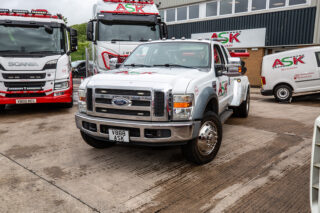
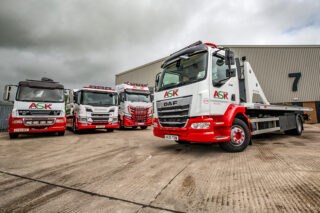
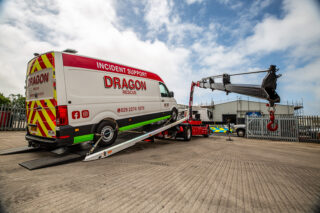
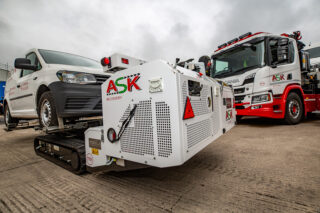
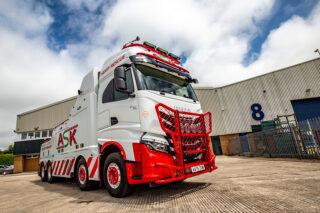
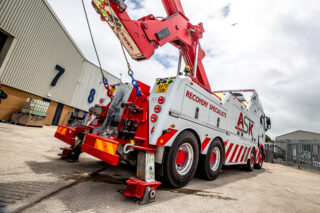
ASK RECOVERY BEGAN WITH JUST TWO VEHICLES IN THE CORNER OF A TRUCK DEALER’S YARD. TODAY, IT OPERATES A DIVERSE FLEET FROM FOUR DEPOTS ACROSS SOUTH AND EAST WALES.
Before striking out on his own, Andrew Archbold (better known as Archie), spent over 30 years learning the recovery and roadside assistance business, playing a pivotal role in a major recovery operation for an employer in the Cardiff area. But when it was time for the owners of that company to sell up, Archie was not even considered as a potential buyer.
And that gave Archie exactly the incentive he needed.
ASK Recovery, established in 2011, was initially based in the corner of the local truck dealer’s yard, with just one Land Rover and a used Volvo FM heavy wrecker to its name. It was full on from the start, with Archie driving the heavy himself and completing 700 jobs in the first year, helped by his son Kieran – many of his customers being people he had dealt with in his old job. Fifteen years on, he now operates a diverse fleet from four depots in Bridgend, Barry, Caerphilly and Cardiff, with his two sons, Kieran and Scott, working alongside him.
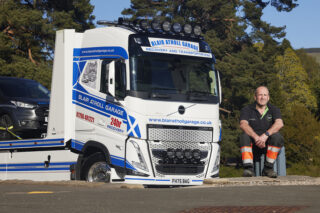
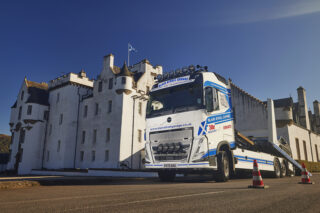
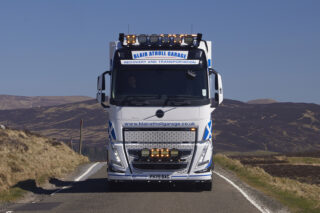
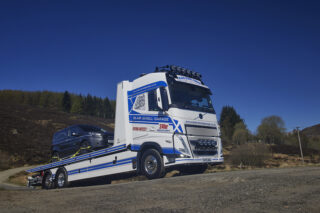
THOSE BREAKING DOWN ON THEIR WAY UP TO THE SCOTTISH HIGHLANDS MIGHT WELL FIND THEMSELVES IN THE HANDS OF BLAIR ATHOLL GARAGE, A FAMILY-RUN BUSINESS THAT'S JUST MOVED UP THE WEIGHT SCALE WITH A NEW VOLVO FH 500 FITTED WITH FALKOM RECOVERY EQUIPMENT
The small but scenic village of Blair Atholl sits quietly at the Gateway to the Highlands, approximately one hour north of Perth. Surrounded by the hills and glens of the wider Atholl region and located within the boundaries of the Cairngorms National Park, it is the very image of postcard Scotland.
The village is perhaps best known as the home of Europe’s only legal private army, the Atholl Highlanders. Charged with protecting the dukes and chiefs of Clan Murray, the regiment is based at nearby Blair Castle and today serves primarily as a ceremonial infantry unit, attracting visitors from around the world. However, the Atholl Highlanders are not the only guardians of the area. Looking after the Perthshire section of the notorious A9 – the main artery to northern Scotland – and the surrounding network of rural roads is an equally dedicated team of road warriors.
With 116 pages of first-class recovery content, what more could you wish for? Click the appropriate link below to purchase your annual subscription, or an individual copy.
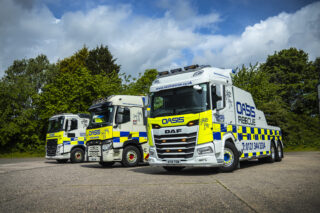
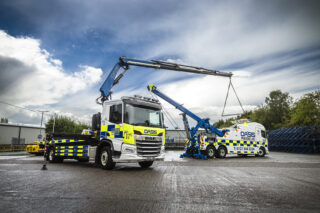
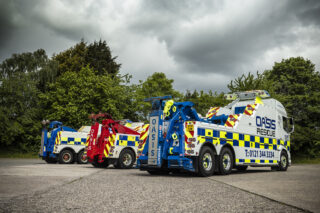
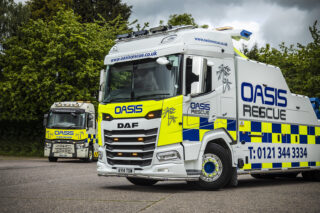
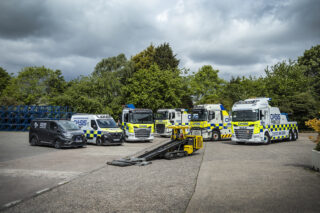
OASIS RESCUE HAS BEEN BASED ON FIRM FOUNDATIONS, BEING SET UP BY AN EXPERIENCED COUPLE WITH A REAL COMMITMENT TO QUALITY RECOVERY SERVICES AND A STRONG WORK ETHIC. AND NOW IT'S ADDED A FOURTH DEPOT TO ITS OPERATION.
To say it’s been a busy time in these past few months for Rayan Owais and Anya Ijaz (inset), the husband-and-wife team behind Oasis Rescue, is an understatement.
In addition to the day-to-day issues of running a successful recovery business, the pair have been finalising the addition of a fourth depot to the operation in Droitwich, as well as welcoming a new arrival in the family.
“I always believe things happen for a reason and the deal just came to me,” Rayan says. “Some customers were saying they wanted help in the Droitwich area, and asking if we could provide it, so we took the opportunity when it was offered. It’s added more stress for us, but I feel that if the opportunity and work are there, why not?”
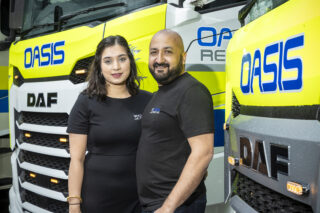
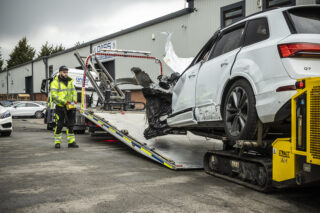
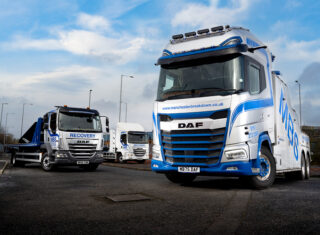
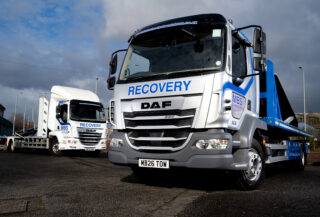
THE PAST 13 YEARS HAVE SEEN MANCHESTER BREAKDOWN SERVICES GROWING EXPONENTIALLY, RISING FROM JUST THREE RECOVERY VEHICLES TO 50. ON SCENE FINDS OUT HOW IT HAS PULLED THIS IMPRESSIVE FEAT OFF.
Some people in business spend their whole career looking for the secret to success while for others, the answer is right in front of them.
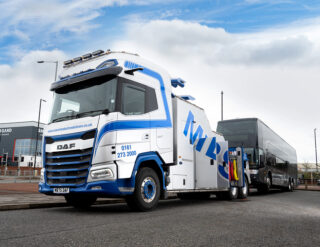
Having established Manchester Breakdown Services (MBS) more than 30 years ago, MD Gerard (Ged) Queenan had – in the back of his mind – grand plans of building up the firm to be a big name in vehicle recovery. But with just three recovery trucks on the fleet, it was still missing something – or someone – to take things to the next level.
Step forward Scott Evans (inset), a qualified truck mechanic with a CV that already included time at Volvo Trucks, Scania, British Airways and many others before he set up his own vehicle repair business. “I got into recovery almost by mistake about 18 years ago when I bought myself a recovery truck,” admits Scott, who is now general manager at MBS. “In my own business, I was sick of having vehicles recovered back to me and getting charged extortionate fees for the privilege.”
With 116 pages of first-class recovery content, what more could you wish for? Click the appropriate link below to purchase your annual subscription, or an individual copy.
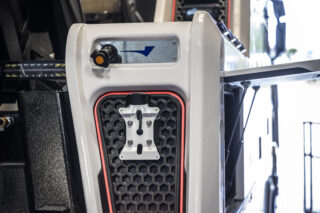
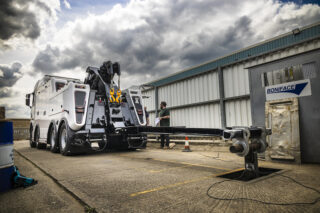
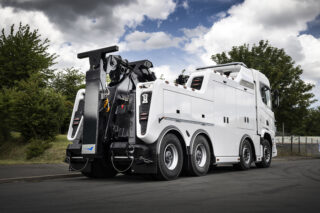
ON SCENE ARGUES THAT DESPITE THE LAUDABLE EFFORTS OF EQUIPMENT MANUFACTURERS LIKE BONIFACE, THE UK's CONSTRUCTION AND USE REGULATIONS MUST BE CHANGED TO ALLOW RECOVERY VEHICLES BETTER SUITED TO THE JOB.
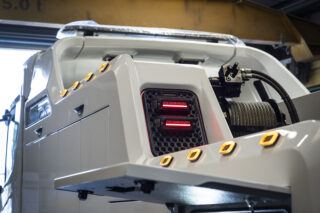
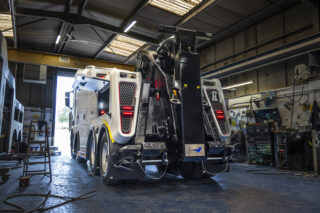
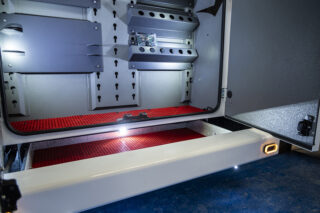
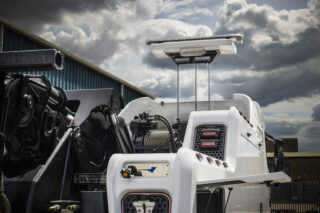
The design and layout of modern heavy recovery vehicles have evolved over the last 40 to 50 years to meet demand for equipment that can cope with intensive operation over a long service life. UK firm Boniface Engineering has been a leader in this market for virtually all of this period, designing and building state-of-the-art equipment, in recent years in conjunction with its US parent Miller Industries. Its designs are well proven and have undergone regular updates to increase their capacity and functionality, and many of the changes stem directly from consultation with end users.
The recovery business has become far more intensive in recent years. Higher traffic volumes have meant breakdowns and accidents can quickly cause serious congestion, making it more important than ever to clear the roads as quickly as possible. So heavy recovery vehicles are often worked intensively in multi-shift operations, and can be operated by several different staff each week.
With 116 pages of first-class recovery content, what more could you wish for? Click the appropriate link below to purchase your annual subscription, or an individual copy.